
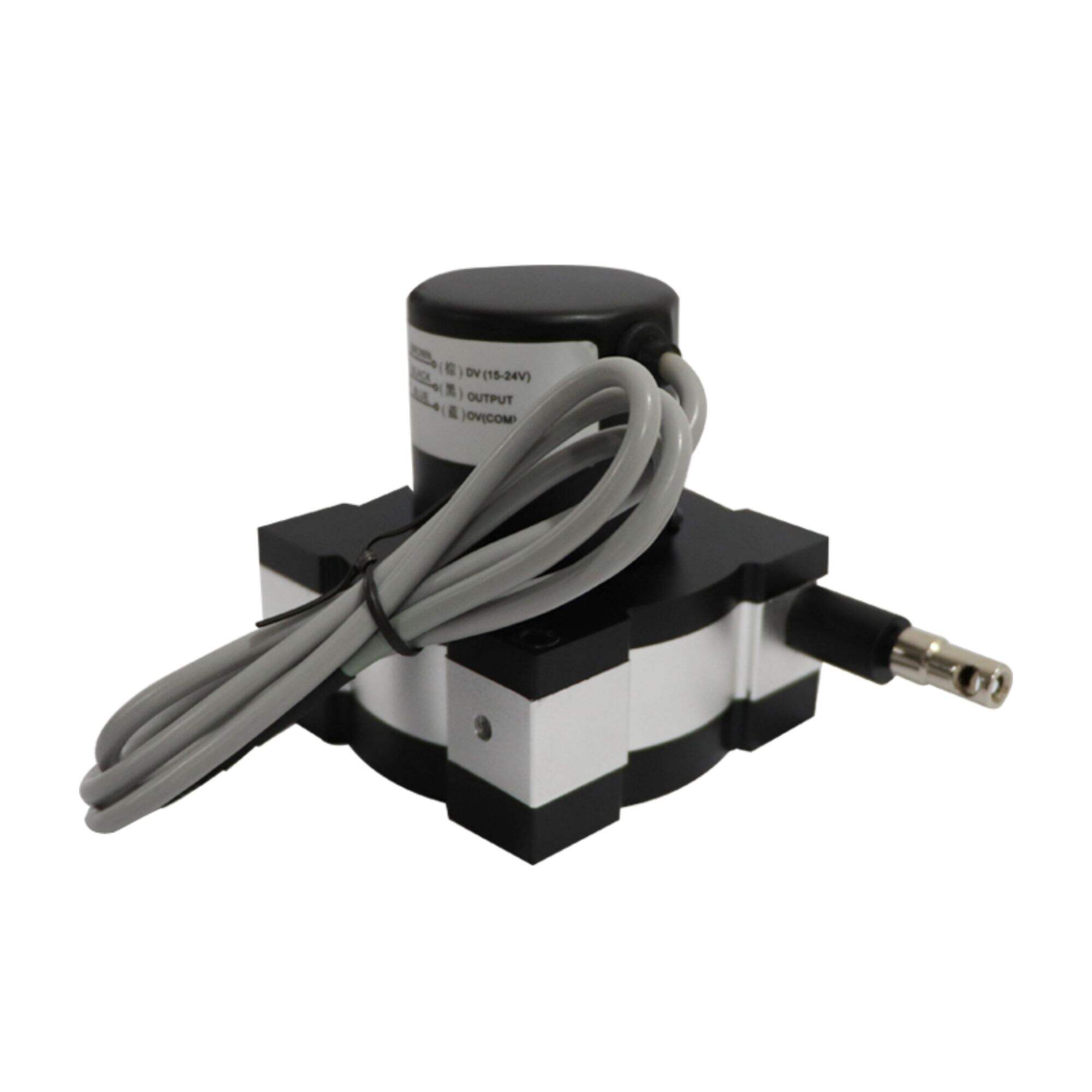
In a world enamored with cutting-edge AI, quantum computing, and self-driving cars, it’s easy to overlook the quiet contributors—the mechanical marvels that keep industrial machines humming, robotic arms synchronized, and bridges structurally sound. One such unsung hero is the Draw wire sensor, a device so deceptively simple, yet ingeniously precise, that it’s become indispensable in engineering applications across the globe.
What is a Draw Wire Sensor?
A Draw Wire Sensor, also known as a string potentiometer or cable extension transducer, is a linear position sensor that uses a retractable wire or cable to measure displacement. Picture a tiny measuring tape coiled inside a rugged housing. As the object attached to the wire moves, the sensor measures the length of wire drawn out—translating that physical movement into an electrical signal.
Simple, right? But don’t be fooled by the minimalism—this device is a master of versatility.
How It Works: Mechanism Meets Elegance
At the core of the sensor lies a spring-loaded spool wound with a durable wire, usually made of stainless steel or synthetic fiber. The free end of the wire is connected to the moving target whose position is to be measured.
When the target moves:
The wire is pulled out of the housing.
The rotation of the spool is measured by an encoder, potentiometer, or another transducer.
This rotational data is then converted into a linear position output.
Depending on the sensor model, output can be:
Analog (0-10V, 4-20mA) for industrial control systems.
Digital (pulse, quadrature, SSI, CANopen) for integration with modern automation systems.
Why the World Still Needs Draw Wire Sensors
In a digital age dominated by laser scanners and LiDARs, why do engineers continue to rely on a draw wire sensor—essentially a glorified yo-yo with a brain?
Here’s why:
1. Simplicity in Harsh Environments
Laser sensors and optical encoders can be thrown off by dust, fog, vibrations, or mechanical shock. Draw wire sensors? They thrive in those conditions. Whether on an offshore oil rig or deep inside a steel plant, they provide reliable readings.
2. Long Measurement Ranges in a Small Package
These sensors can measure displacements from just a few millimeters up to 50 meters or more, all from a relatively compact housing. That’s a game-changer for mobile equipment, cranes, elevators, or telescopic booms.
3. Cost-Effective and Low Maintenance
With minimal moving parts and no need for line-of-sight, draw wire sensors offer long lifespans with little upkeep, making them ideal for long-term installations.
Innovative Applications You’d Never Expect
– Autonomous Robotics
In indoor AGVs (automated guided vehicles), draw wire sensors provide real-time feedback on robotic arm extension and retract motion, ensuring precise object manipulation.
– Aerospace Testing
During wind tunnel tests, draw wire sensors track micro-movements of wings and fuselage components under stress, feeding vital data into simulation models.
– Medical Devices
In physical rehabilitation systems, they help monitor limb motion in exoskeletons or resistance machines, helping clinicians personalize therapy regimens.
– Theater and Stage Automation
In Broadway-style productions, draw wire sensors are hidden behind the curtains, ensuring that movable set pieces shift with surgical precision in sync with lighting and music cues.
Future of Draw Wire Sensors: Marrying Mechanics with Intelligence
While the basic principle has remained unchanged for decades, modern draw wire sensors are evolving. Embedded microcontrollers, wireless connectivity, and edge computing are transforming these analog warriors into smart devices.
Imagine:
A sensor that not only tracks position but detects anomalies like jerks, slippage, or unexpected resistance.
A sensor networked into an IoT system, reporting live health diagnostics to maintenance teams.
Self-calibrating draw wire systems that adjust for thermal expansion, wear, and environmental variables.
Conclusion: A Cable That Measures More Than Distance
In an industry obsessed with what’s new, the draw wire sensor stands as a testament to the brilliance of mechanical design. It quietly measures motion, safeguards machines, and ensures accuracy in fields as varied as aerospace and agriculture.
Perhaps it’s time to give credit where it’s due—to the humble wire that draws not just data, but the very blueprint of motion.