
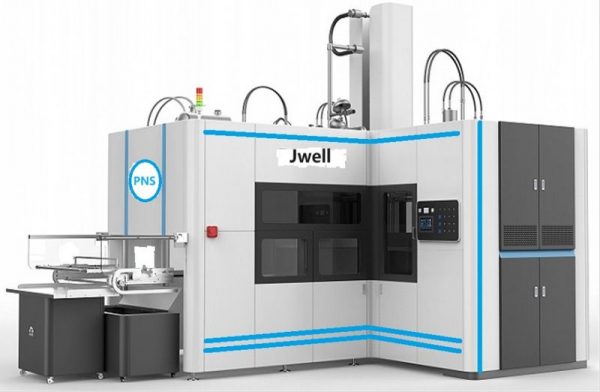
Pulp molding machines have become an essential part of modern packaging, especially as industries move toward sustainability and eco-friendly practices. These machines take waste paper and turn it into versatile molded packaging products such as trays, clamshells, and protective inserts for Pulp Molding Machine and food items. The process is a testament to how innovation and sustainability can work together, converting everyday waste into valuable products. To understand the transformation from waste paper to finished packaging, it’s necessary to examine the inner workings of a pulp molding machine step by step.
The Journey Begins: Collection and Preparation of Raw Material
The operation starts with the sourcing of waste paper. This includes newspapers, office paper, cardboard, and other forms of discarded paper products. The selected waste paper is sorted to remove contaminants like plastics, metal pieces, or laminated materials. Once sorted, the paper is shredded into smaller pieces to facilitate the pulping process.
Water is added to the shredded paper in a hydrapulper, a machine that agitates the mixture to break the paper down into fibers. This mechanical process turns the solid waste into a slurry, often referred to as pulp. Depending on the end product’s specifications, additives like waterproofing agents, colorants, or strengtheners may be introduced at this stage. The resulting pulp must have a consistent composition and fiber distribution to ensure uniform molding.
Pulp Refining and Consistency Control
Before the pulp can be used for molding, it undergoes refining to further modify the fiber characteristics. Refining improves bonding between fibers, which is crucial for the strength and surface finish of the final product. The pulp is then passed through screens and cleaners to remove any remaining impurities or oversized particles. This ensures that the pulp is clean, homogenous, and ready for the molding process.
At this stage, consistency is key. The water-to-fiber ratio in the pulp must be controlled precisely. A pulp with too much water will not form properly on the molds, while a pulp that is too thick may clog the machinery. Sensors and control systems monitor the pulp consistency, often maintaining a ratio of around 3-5% fiber to water. This highly diluted pulp is ideal for the vacuum forming process used in most pulp molding machines.
Molding Stage: Forming the Shape
Once the pulp is ready, it moves to the forming section of the machine. This is where the pulp molding machine showcases its core functionality. A forming mold—often made from fine metal mesh—is submerged in the pulp slurry. Vacuum suction is applied from inside the mold, drawing the pulp fibers to its outer surface. As the water is pulled through the mesh, a layer of wet fiber begins to build on the mold’s surface, gradually taking the shape of the mold.
The precision of the mold determines the accuracy and finish of the final product. Therefore, molds are custom-designed for specific packaging needs. This stage is crucial because it defines the geometry, thickness, and surface texture of the item being produced. The vacuum not only helps in forming the product but also ensures water is removed quickly and efficiently.
Some machines use a transfer mold system where the newly formed wet product is handed over to another mold, especially in multi-step production lines. This helps speed up the process and maintain production flow.
Pressing and De-Watering
The molded product, still wet and delicate, is then transferred to a pressing station. In this step, two molds—one acting as a die and the other as a punch—come together to press the product. This compresses the fiber layers and removes excess water, improving the product’s strength and dimensional stability. In more advanced systems, this pressing stage can also be combined with heated molds, beginning the drying process simultaneously.
Pressing not only enhances the structural integrity but also refines the appearance by smoothing out surface irregularities. It’s a critical phase when producing premium packaging where aesthetic appeal is just as important as functionality.
Thermal Drying: Setting the Structure
After pressing, the molded pulp item still contains a significant amount of moisture—sometimes up to 60%. To achieve the desired dry state, it must undergo a drying phase. There are several methods for drying, including hot-air ovens, infrared radiation, and heated molds, depending on the machine design and energy preferences.
Drying is energy-intensive, and thus, many manufacturers aim to make this step as efficient as possible. Conveyor drying systems are common in high-capacity facilities. The products are loaded onto conveyors that pass through a heated tunnel where warm air circulates and removes moisture evenly. Proper drying ensures the product retains its shape and gains the rigidity needed for its intended use.
Improper or uneven drying can lead to warping, cracking, or loss of dimensional accuracy. Therefore, the airflow, temperature, and exposure time are meticulously controlled to produce uniform results.
Trimming and Finishing Touches
Once the product is fully dried, it moves to the trimming section. Although molds are designed to produce precise shapes, some excess pulp or rough edges may remain. Cutting machines, often equipped with sensors and robotic arms, trim the products to their final dimensions. For more complex packaging, die-cutting or laser cutting may be used to add perforations or holes.
Depending on the application, additional finishing processes may be applied. For example, food packaging might undergo surface treatment to enhance water and oil resistance. Branding elements such as embossing or printing can also be added to meet marketing or compliance requirements.
Quality Control and Inspection
At every stage, from pulping to finishing, quality control plays a central role in ensuring the final products meet safety, strength, and aesthetic standards. Automated vision systems, sensors, and manual checks are commonly employed to detect defects such as cracks, discoloration, or dimensional inaccuracies.
Random sampling, weight checking, and moisture content analysis ensure consistency across batches. In food or medical packaging applications, hygiene standards are strictly maintained, and contamination control is essential. The end goal is to deliver reliable, safe, and sustainable packaging solutions.
Automation and Technological Advancements
Modern pulp molding machines are increasingly automated and integrated with intelligent control systems. Programmable logic controllers (PLCs), human-machine interfaces (HMIs), and even IoT-based monitoring tools are standard features in advanced setups. These allow operators to monitor production parameters, detect anomalies, and optimize performance in real time.
Automation has significantly improved productivity and reduced manual labor. It also minimizes waste and energy consumption by ensuring optimal use of resources. Some systems are equipped with energy recovery features that reuse heat from drying units to preheat incoming air, further boosting efficiency.
Environmental Benefits and Sustainability
One of the most compelling aspects of pulp molding technology is its eco-friendly nature. The use of recycled paper reduces reliance on virgin materials, and the final products are biodegradable and compostable. Unlike plastic packaging, molded pulp decomposes naturally within weeks, leaving no toxic residues.
Furthermore, waste from the production process—such as trimmings and faulty items—can be re-pulped and returned to the system, creating a closed-loop manufacturing cycle. Water used in the process is filtered and reused multiple times, reducing overall consumption and minimizing environmental impact.
As businesses and consumers become more environmentally conscious, the demand for molded pulp packaging continues to grow. Industries ranging from electronics to agriculture are adopting it as a sustainable alternative to plastic and Styrofoam.
Conclusion: From Waste to Worth
The operation of a pulp molding machine is a seamless integration of mechanical engineering, material science, and sustainable practices. What begins as discarded paper ends up as a durable, functional, and biodegradable product. Each stage—from pulping and forming to drying and finishing—contributes to transforming waste into value.
In an age where the environmental cost of packaging materials is under scrutiny, pulp molding machines represent a practical solution. They not only reduce the burden on landfills but also provide industries with a green alternative that doesn’t compromise on performance. As technology evolves, these machines will likely become even more efficient, versatile, and central to the circular economy of the future.