
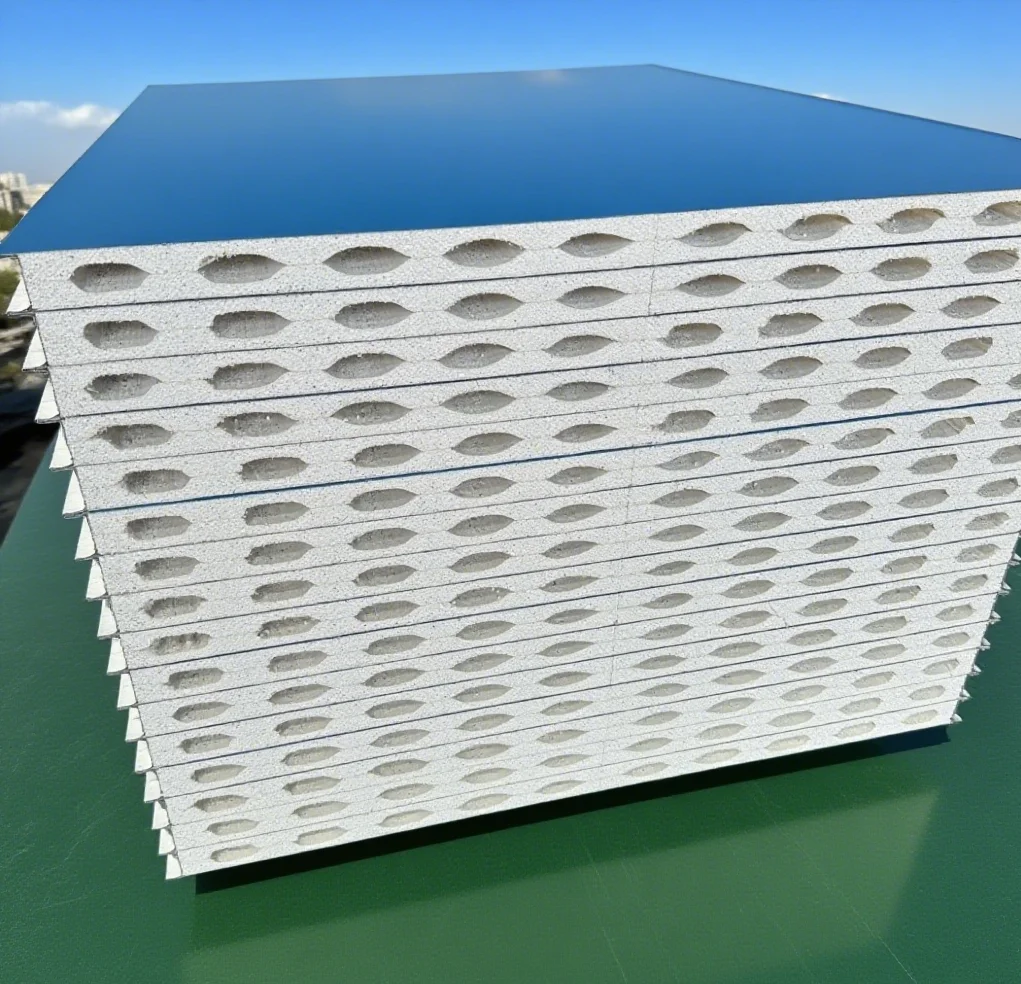
In an age where architecture meets sustainability and safety isn’t a luxury but a necessity, a quiet hero has emerged in the construction world—rock wool sandwich panel. Often overlooked, this material is not just another building block. It’s a product of volcanic origins, engineered ingenuity, and environmental consciousness.
What is a Rock Wool Sandwich Panel?
At its core, a rock wool sandwich panel is a layered construction material. It consists of two rigid metal sheets—typically galvanized or pre-painted steel—encasing a core made of rock wool insulation. But what sets it apart isn’t just the composition—it’s the performance.
Rock wool, also known as mineral wool, is produced by melting basalt rock and spinning it into fibers. This volcanic origin grants it a unique set of physical properties—high thermal resistance, natural fireproofing, and exceptional sound insulation.
A Volcanic Legacy Turned Modern Marvel
The story of rock wool begins in nature. Volcanic eruptions occasionally produce a wool-like material, later discovered by early 20th-century engineers and industrialists. With a bit of human intervention, this natural wonder became a controlled and scalable material—used initially for insulation but now adapted into versatile construction panels.
Why Choose Rock Wool Sandwich Panels?
1. Unrivaled Fire Resistance
Rock wool can withstand temperatures over 1,000°C, making these panels ideal for buildings where fire safety is paramount—airports, hospitals, data centers, and industrial plants. Unlike polyurethane or EPS cores, rock wool does not melt, drip, or emit toxic smoke under fire.
2. Superior Thermal and Acoustic Insulation
Its dense fibrous structure traps air, making it a superb thermal insulator. In cold climates, it keeps interiors warm; in hot regions, it reduces HVAC load. And for buildings in busy urban zones or industrial areas, it dramatically reduces sound transmission.
3. Sustainability at Its Core
Rock wool is 100% recyclable and often made from up to 75% recycled materials. It doesn’t degrade over time, and it resists mold, pests, and chemical corrosion—contributing to longer building lifespans and lower maintenance costs.
4. Mechanical Strength and Structural Integrity
Despite being lightweight, rock wool panels offer high compressive strength and rigidity. They can span significant widths without sagging, which simplifies installation and reduces framing needs.
Applications Across Industries
Commercial Buildings: Shopping malls, office towers, and hospitals rely on these panels for aesthetics, safety, and climate control.
Clean Rooms: Their non-organic core prevents microbial growth, perfect for pharmaceuticals and labs.
Warehouses and Cold Storage: Thanks to their insulation efficiency, they help maintain constant internal temperatures.
Prefabricated Housing: In the modular construction boom, these panels are chosen for rapid deployment and resilience.
Innovation Meets Design
Modern rock wool sandwich panels are no longer confined to gray boxes. They come in a variety of colors, textures, and finishes, enabling architects to maintain design integrity while meeting safety and performance standards. Some even mimic natural materials like wood and stone.
Future-Proofing Construction
With increasing focus on green buildings, LEED certifications, and net-zero carbon goals, materials like rock wool sandwich panels are becoming essential. They contribute to lower energy consumption, reduce environmental impact, and ensure safer, more resilient structures.
Final Thought: The Silent Guardian
In an industry where the loudest innovations often get the spotlight—like smart homes or 3D printing—rock wool sandwich panels are the silent guardians. They don’t shout innovation. They are innovation—working invisibly to protect, insulate, and sustain.
In the decades ahead, as construction continues to evolve under the pressures of climate change, urbanization, and safety, one thing is certain: rock wool sandwich panels will remain at the forefront—quietly shaping a safer, smarter, and more sustainable built environment.