
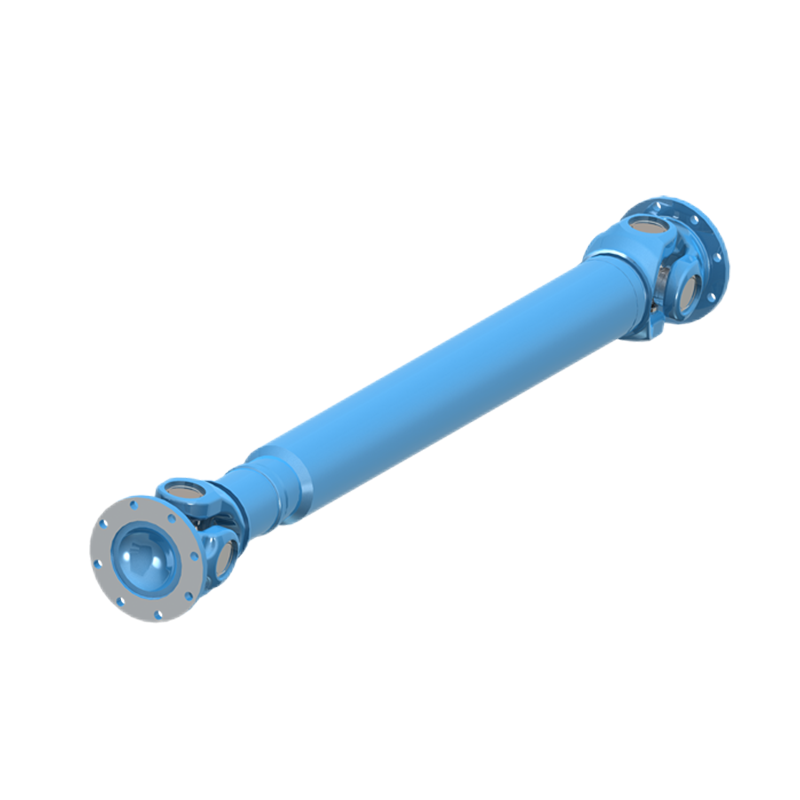
When it comes to transmitting torque in mechanical systems, engineers and designers often require a coupling that offers flexibility, durability, and precision. In this context, bellows couplings emerge as an exceptional solution. Known for their unique bellows coupling construction and remarkable performance in high-precision applications, bellows couplings stand out as one of the most ingenious solutions for motion control and torque transmission.
What is a Bellows Coupling?
A bellows coupling is a type of mechanical coupling that consists of a series of metal bellows, typically made from stainless steel, wound in a spiral pattern. These bellows allow for flexibility, which helps absorb misalignment between the connected shafts, all while providing a rigid connection for torque transmission.
The key characteristic of the bellows coupling is the flexibility provided by the bellows itself. When subjected to torque, the bellows compress and expand, enabling the coupling to accommodate angular, axial, and radial misalignments without transmitting excessive forces that could damage the connected components. This makes them an ideal choice for high-precision applications where minimal backlash and minimal deflection are crucial.
Core Features and Benefits
1. High Flexibility and Misalignment Compensation
The bellows’ spiral construction is the backbone of the coupling’s flexibility. This flexibility allows it to absorb three types of misalignments:
Angular Misalignment: When the shafts are not perfectly aligned at an angle, the bellows can flex to compensate for this angular misalignment.
Radial Misalignment: Even when the shafts are offset laterally, the bellows can adapt, preventing strain on other mechanical components.
Axial Misalignment: Variations in the axial position of the shafts do not create excessive stress, as the bellows can stretch or compress.
This comprehensive misalignment compensation gives the bellows coupling a significant advantage in precision-driven systems.
2. Minimal Backlash
Unlike traditional couplings that use mechanical components like gears or elastomers, bellows couplings are backlash-free. This means that they do not suffer from the “play” or “slack” that can be found in gear-based couplings. For systems requiring high-speed operation and precise positioning, such as CNC machines and robotics, the absence of backlash ensures that the transmitted motion is smooth and accurate.
3. High Torque Transmission
Despite their flexibility, bellows couplings can transmit high amounts of torque without deformation or fatigue. The thin-walled bellows are designed to handle stress efficiently while maintaining a stable and constant torque transfer. This makes them suitable for high-performance systems.
4. Compact Design
Bellows couplings are remarkably compact and lightweight, especially compared to other flexible couplings. The bellows’ spiral shape allows for a small radial footprint, making them ideal for situations where space is at a premium, such as in medical devices, aerospace applications, and high-precision manufacturing systems.
5. Durability and Corrosion Resistance
Made from high-quality materials like stainless steel or Inconel, bellows couplings are extremely durable and resistant to wear. Their construction also allows them to withstand high temperatures and harsh environmental conditions. The materials’ resistance to corrosion makes them suitable for applications in harsh environments like chemical processing or marine applications.
6. Low Maintenance
One of the standout features of bellows couplings is their maintenance-free operation. There are no seals, lubricants, or wear components that require ongoing attention. The metallic bellows can operate in environments where lubricants may be undesirable or even harmful, adding to their robustness.
Applications of Bellows Couplings
Bellows couplings are employed in a diverse range of industries and applications. Here’s a closer look at some notable uses:
1. Precision Motion Control Systems
In high-precision motion control systems, such as robotic arms, CNC machines, and laser cutting equipment, the need for backlash-free and precise torque transmission is paramount. Bellows couplings are perfect for these applications because they ensure minimal distortion of the motion, maintaining accuracy even under varying loads.
2. Medical Equipment
Medical devices like MRI machines, surgical robots, and diagnostic instruments often require components that can withstand precise and constant motion without causing interference or backlash. Bellows couplings, with their high level of flexibility and resistance to environmental conditions, are ideal in these applications, ensuring reliable performance in a sterile and high-precision environment.
3. Aerospace and Defense
The aerospace industry relies on components that can handle extreme conditions, including high temperatures, vibration, and pressure. Bellows couplings, made from materials like Inconel, are well-suited for these conditions, ensuring the integrity of mechanical systems in aircraft, satellites, and other aerospace applications.
4. Semiconductor Manufacturing
In semiconductor equipment, where precision motion is essential, bellows couplings are used to connect critical parts of machinery without introducing errors or vibrations. The clean and compact nature of the coupling makes it a perfect fit for such environments.
5. Automated Test Systems
In automated test and measurement systems, where accuracy is critical, bellows couplings are used to connect motors, drives, and actuators to ensure that testing equipment operates smoothly and without error.
6. High-Speed Turbomachinery
Bellows couplings can handle the high rotational speeds found in turbomachinery, such as turbines and compressors. Their ability to manage angular misalignment while transmitting torque efficiently makes them perfect for these high-stress environments.
How Bellows Couplings Differ from Other Couplings
When compared to other types of couplings, such as gear couplings, flexible elastomer couplings, or universal joints, the bellows coupling stands out due to its:
Backlash-free operation: Unlike gear couplings, which can exhibit backlash, bellows couplings offer precise torque transmission.
Corrosion resistance: Many other coupling types may be prone to rust or wear in harsh environments, whereas the materials used in bellows couplings, like stainless steel, are resistant to corrosion.
High-frequency operation: Due to their light weight and flexibility, bellows couplings are ideal for high-speed applications.
Conclusion: The Silent Workhorse of Precision Engineering
Bellows couplings are often the unsung heroes of the mechanical world, quietly ensuring precision, durability, and reliability in some of the most demanding applications. Their ability to accommodate misalignment, transmit torque efficiently, and operate in extreme conditions makes them a go-to solution for industries ranging from robotics to aerospace.
By offering flexibility without compromising on strength, bellows couplings provide a perfect balance of reliability and precision, making them one of the most innovative solutions in mechanical coupling design. Whether you’re in high-tech manufacturing, robotics, or medical equipment design, bellows couplings will continue to play an indispensable role in ensuring the smooth and efficient operation of advanced machinery.