
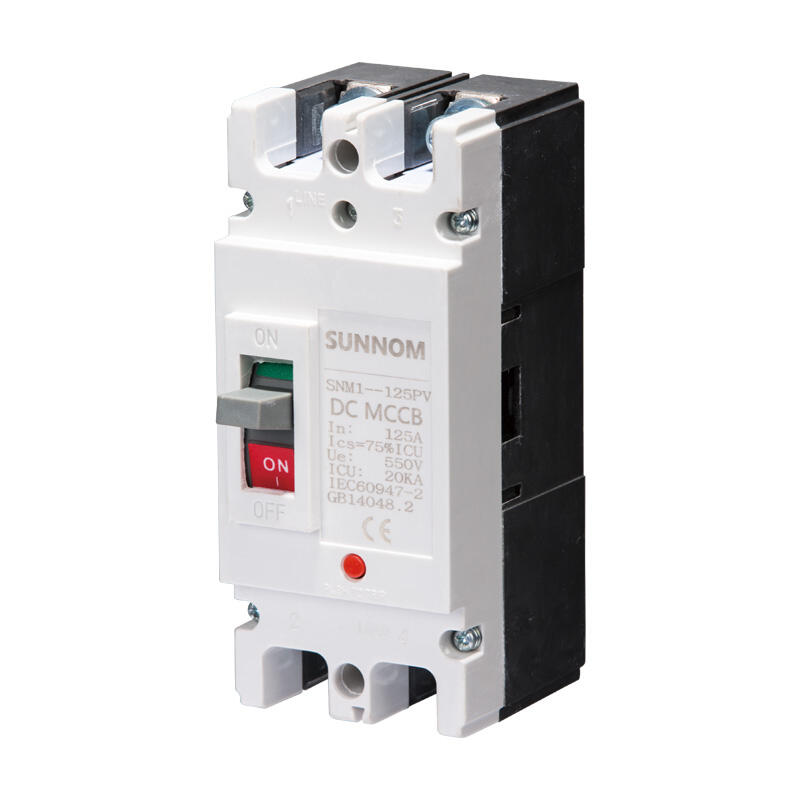
 A DC circuit breaker plays a vital role in the safety and performance of electrical systems that operate on direct current. Whether in renewable energy setups like solar panel systems, electric vehicles, battery banks, or industrial control systems, the dc circuit breaker of a properly installed DC circuit breaker cannot be overstated. It is responsible not only for protecting equipment from overcurrent conditions but also for safeguarding human life. When installation is done correctly, the breaker ensures the long-term stability, reliability, and safety of the electrical infrastructure. Improper installation, on the other hand, can lead to dangerous outcomes such as fires, equipment failure, or electrical shock.
Direct current systems behave differently from alternating current systems, especially in the context of circuit interruption. While AC systems benefit from natural zero-crossing points that assist in extinguishing electrical arcs, DC systems lack this feature. As a result, the design and function of DC circuit breakers are inherently more complex, and their installation must be handled with heightened care and precision. The proper orientation, connection, and configuration of a DC breaker are essential for it to function correctly under fault conditions.
One of the most crucial reasons for properly installing a DC circuit breaker is to ensure accurate protection during overloads and short circuits. The circuit breaker is calibrated to interrupt the flow of current when it exceeds a specific threshold, thereby preventing damage to wires, devices, and connected components. However, if the breaker is incorrectly installed—such as connected in reverse polarity or placed in the wrong part of the circuit—it may not trip as intended. In such scenarios, the system could continue to operate while the fault condition worsens, potentially leading to overheating, equipment destruction, or fire.
Proper installation also ensures that the breaker can effectively isolate electrical components during maintenance. This is especially important in battery systems or solar arrays where residual voltage can pose serious hazards even when the system appears to be turned off. A correctly placed and installed DC breaker allows technicians to safely disconnect parts of the system, reducing the risk of accidental shock or arc flash. Without this ability, any service work becomes more dangerous and prone to errors, which in turn raises the risk of injury or future system failure.
Correct polarity alignment during installation is a detail that cannot be ignored in DC systems. Unlike AC systems where polarity reverses continuously, DC systems have a fixed positive and negative terminal. Installing a DC circuit breaker backwards can cause it to malfunction. Most modern DC breakers are designed with polarity markings, and disregarding these during installation could lead to internal arcing, degraded performance, or complete failure of the breaker. Over time, this misalignment may reduce the breaker’s lifespan or result in dangerous arcing conditions when it attempts to interrupt current.
Another aspect of importance is ensuring that the breaker’s interrupt rating matches or exceeds the potential fault current of the circuit. During installation, careful attention must be paid to the sizing and selection of the breaker based on system specifications. If a breaker is under-rated, it may not be capable of safely breaking the circuit in the event of a fault. On the other hand, an overrated breaker may not trip at the appropriate time, allowing prolonged exposure to overcurrent and increasing the chance of damage. Proper installation includes verifying that the breaker’s ratings align with the real-world operating conditions of the circuit.
Secure mechanical mounting is another critical consideration during DC circuit breaker installation. Loose connections or poor mounting can lead to increased resistance at the terminals, resulting in localized heating, arcing, and potential fire hazards. The breaker must be mounted on a suitable surface using the correct hardware to ensure it remains in place under both normal and fault conditions. Electrical terminals should be tightened according to manufacturer specifications, avoiding over-tightening that could damage components or under-tightening that could cause electrical failure. A properly mounted and connected breaker maintains the integrity of the system and minimizes the risk of operational issues.
Thermal management must also be taken into account during installation. DC circuit breakers can generate heat when they carry high currents, particularly in continuous-use scenarios such as in battery banks or photovoltaic systems. Installing them in well-ventilated enclosures, away from direct sunlight or other heat sources, helps prevent overheating. Inadequate spacing between multiple breakers can lead to cumulative heat buildup, reducing the lifespan of each device. Therefore, part of proper installation includes ensuring the physical layout of breakers and other components supports good thermal performance.
The integration of the DC breaker with other components like fuses, contactors, or controllers should also be carefully planned during installation. Breakers must be positioned in a way that complements the flow of current and ensures maximum protection throughout the system. For instance, in a solar power setup, a DC breaker might be installed between the charge controller and the battery bank to prevent backflow or excessive charging currents. Each segment of the circuit may have different protection needs, and a poorly placed breaker could render part of the system unprotected. Strategic placement during installation ensures that each component operates within its safe limits.
Another benefit of correct installation is the minimization of nuisance tripping. If a DC breaker is improperly installed in a location with high inrush current—such as close to capacitive loads—it may trip unnecessarily even though the system is operating normally. This not only causes inconvenience but also leads to unnecessary wear on the breaker and potential downtime. By understanding the circuit behavior and installing the breaker accordingly, nuisance trips can be significantly reduced, leading to a more reliable system.
The importance of proper documentation and labeling cannot be overlooked during the installation process. Each DC breaker should be clearly labeled to indicate its function, polarity, voltage rating, and the part of the circuit it protects. This information is essential for future maintenance, troubleshooting, and safety. Clear labeling helps technicians quickly identify which breaker to operate in an emergency or during scheduled work. In complex systems with multiple DC sources and circuits, proper identification can prevent dangerous mistakes such as disconnecting the wrong section or inadvertently leaving part of the circuit energized.
Regular testing and inspection are integral to maintaining the integrity of DC breakers, and these tasks are greatly simplified by correct initial installation. A well-installed breaker is easy to access, test, and reset. This encourages periodic checks that ensure the breaker is still functioning as designed. Conversely, a poorly installed breaker—hidden behind panels, tightly crammed, or loosely connected—discourages inspection and increases the risk of unnoticed failure. Long-term comfort, safety, and system reliability all depend on a thoughtful installation process.
In high-voltage or high-capacity DC systems, compliance with electrical codes and standards is mandatory, and proper installation is essential to meet these regulations. Failing to adhere to guidelines set by organizations such as the NEC (National Electrical Code) or IEC (International Electrotechnical Commission) can result in legal liabilities, insurance complications, and increased risk of system failure. These codes often specify how and where DC breakers should be installed, including required spacing, grounding, and enclosure types. Adhering to these during installation ensures both legal compliance and the highest level of safety.
In conclusion, the proper installation of a DC circuit breaker is not merely a technical detail but a foundational aspect of any safe and effective electrical system. From ensuring fault protection and maintenance safety to improving operational efficiency and meeting compliance requirements, the way a DC breaker is installed directly affects its performance and longevity. Every step of the installation process—from selecting the right breaker and mounting it securely to ensuring polarity and thermal management—is critical to the overall health of the system. By taking the time and care to install DC circuit breakers correctly, users ensure a safer, more reliable, and more resilient electrical infrastructure for years to come.