
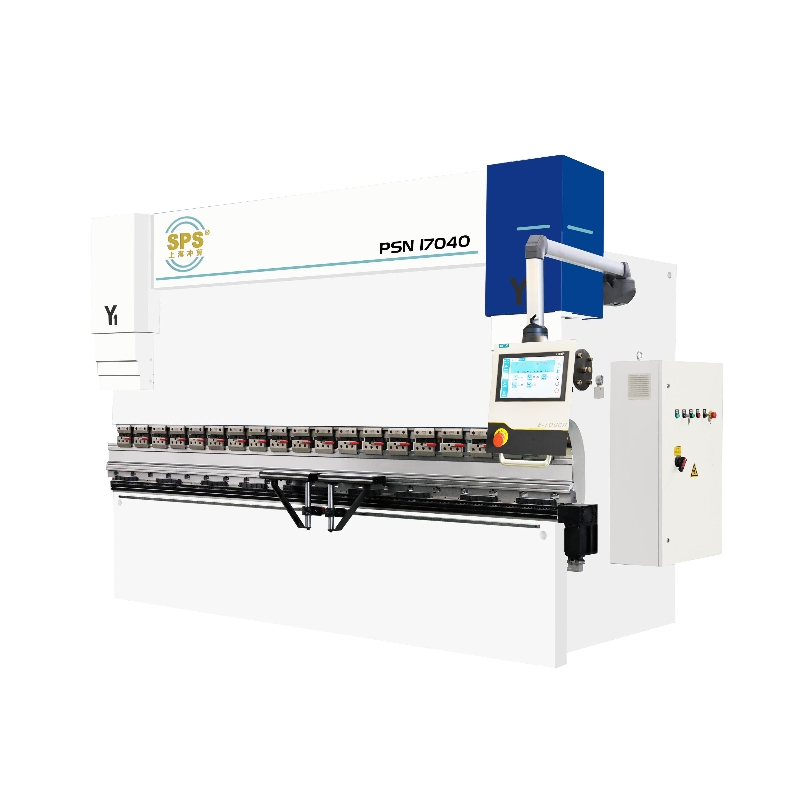
When we think of advanced manufacturing and metalworking, one piece of machinery stands as a true testament to the marriage of precision, power, and innovation—the Press Brake. Often regarded as one of the cornerstones of the sheet metal fabrication industry, the press brake’s transformative impact on metal forming can be easily overlooked. However, its role in shaping everything from tiny components to massive structural pieces is nothing short of revolutionary. This article takes a deep dive into the functionality, evolution, and influence of the press brake, uncovering its unique contribution to modern manufacturing.
What is a Press Brake?
At its core, a press brake is a machine used to bend or fold sheet metal into precise shapes. It works by applying force through a die system, where the metal sheet is placed between a punch and a die. When pressure is applied, the sheet metal is deformed to conform to the die’s shape, resulting in an angular bend. This seemingly simple process is central to producing everything from aerospace components to automotive parts and architectural elements.
Unlike other methods like cutting or punching, bending requires a high degree of accuracy and control. This is where the press brake excels. It provides repeatable and consistent results, ensuring that the formed metal pieces maintain tight tolerances—critical for industries where even the slightest error can have cascading effects.
The Evolution of Press Brakes
The history of the press brake is a testament to the continuous drive for precision in manufacturing. The first press brake was developed in the mid-19th century, when industrialists began experimenting with mechanical ways to improve the bending of metal sheets. Early models were manually operated, using a hand-cranked system to apply pressure to the metal. This limited the force that could be applied and the precision of the bends.
In the early 20th century, hydraulic systems revolutionized press brake design. The introduction of hydraulic power allowed for greater control over the force applied to the metal, increasing both precision and the size of materials that could be bent. Modern CNC (Computer Numerical Control) press brakes, introduced in the latter part of the 20th century, took this innovation further. These automated systems allow for real-time adjustments to bending parameters, enhancing repeatability and reducing human error. Today’s press brakes are a fusion of mechanical, hydraulic, and digital technologies, offering unmatched versatility and precision in a range of industrial applications.
The Anatomy of a Press Brake
Modern press brakes are highly engineered machines consisting of several key components:
Frame: The foundation of the press brake, designed to withstand immense pressure without deforming. It is often made from high-strength steel or other durable materials to ensure the machine’s longevity.
Ram: The moving component that houses the punch. The ram applies force to the sheet metal when it descends onto the material, causing it to bend.
Bed: The stationary surface upon which the sheet metal is placed. It often features guides to hold the material in place during the bending process.
Tooling: The punch and die system, which determines the shape of the bend. Tooling can be customized to produce a wide variety of bends, from simple angles to complex curves.
CNC Control System: The brain of modern press brakes. This system allows operators to program and control the bending process with precision. CNC systems can automatically adjust the position of the ram, the bending speed, and the pressure applied, all of which ensure perfect results every time.
Types of Press Brakes
Press brakes come in several varieties, each with its own advantages and suitable applications:
Mechanical Press Brakes: These are the traditional press brakes, using a mechanical flywheel or clutch to provide the bending force. They are typically faster but offer less precision compared to hydraulic or CNC systems.
Hydraulic Press Brakes: These use hydraulic cylinders to generate force, offering a smoother operation with more precision. Hydraulic press brakes can accommodate larger and heavier sheets of metal and can bend materials with varying thicknesses.
CNC Press Brakes: By far the most advanced type of press brake, CNC-controlled models offer unmatched flexibility and precision. Operators can program a wide range of bends, angles, and shapes, allowing for fully automated production with little human intervention.
Electric Press Brakes: These are energy-efficient machines that use electric motors instead of hydraulic systems. They are faster and more precise than their hydraulic counterparts, but typically, they are suited for lighter-duty applications.
Applications and Industries
Press brakes are indispensable in numerous industries. Their ability to bend and shape sheet metal is central to the production of many products. Here are just a few industries where press brakes play a crucial role:
Automotive Industry: Press brakes are used extensively in the automotive sector to form parts like chassis, brackets, and body panels. With increasing demand for lightweight yet durable components, press brakes help manufacturers produce high-quality, high-performance parts that meet strict standards.
Aerospace: In aerospace manufacturing, precision is paramount. Press brakes are used to create critical structural components, such as fuselage frames and wing spars, where tolerances can mean the difference between safety and failure.
Construction: Press brakes shape steel for structural applications in buildings, bridges, and infrastructure projects. Curved panels, reinforcements, and various architectural elements are all formed using these machines.
HVAC (Heating, Ventilation, and Air Conditioning): Press brakes are also vital in the production of ductwork. The ability to make precise bends ensures the proper fit and function of HVAC systems.
Electronics: Press brakes are used to fabricate small metal parts for electronic devices, including enclosures, connectors, and heat sinks, contributing to the ever-growing consumer electronics industry.
The Role of Press Brakes in Sustainability
As the world moves toward more sustainable practices, the press brake is stepping up to the challenge. The precision and efficiency of CNC press brakes reduce material waste, as components are cut and bent with high accuracy, minimizing the need for rework. Additionally, many modern press brakes are designed to optimize energy consumption, with electric and hybrid models offering energy-efficient alternatives to traditional hydraulic systems. This efficiency is helping manufacturers lower their carbon footprints, contributing to a more sustainable manufacturing process.
The Future of Press Brakes: Automation and AI Integration
The future of press brake technology is incredibly exciting. As automation continues to play a larger role in manufacturing, press brakes are becoming even more integrated with other systems on the factory floor. Artificial intelligence (AI) and machine learning algorithms are already being applied to improve process optimization, predict maintenance needs, and further increase machine autonomy.
AI-driven press brakes can analyze the metal’s behavior during bending, adjusting parameters in real-time to improve accuracy and reduce defects. The automation of loading, unloading, and tool changing is also on the rise, further reducing the need for manual labor and boosting production efficiency.
Conclusion
The press brake is far more than just a tool for bending metal. It’s a vital part of the modern manufacturing landscape, enabling industries to produce a wide array of products with precision and efficiency. From its humble beginnings as a hand-cranked device to today’s highly sophisticated CNC-controlled systems, the press brake has evolved into a powerhouse of metal forming, shaping the world around us in ways both large and small. As technology continues to advance, the press brake will undoubtedly play a key role in driving the future of manufacturing, offering even greater capabilities and possibilities for designers and engineers.