
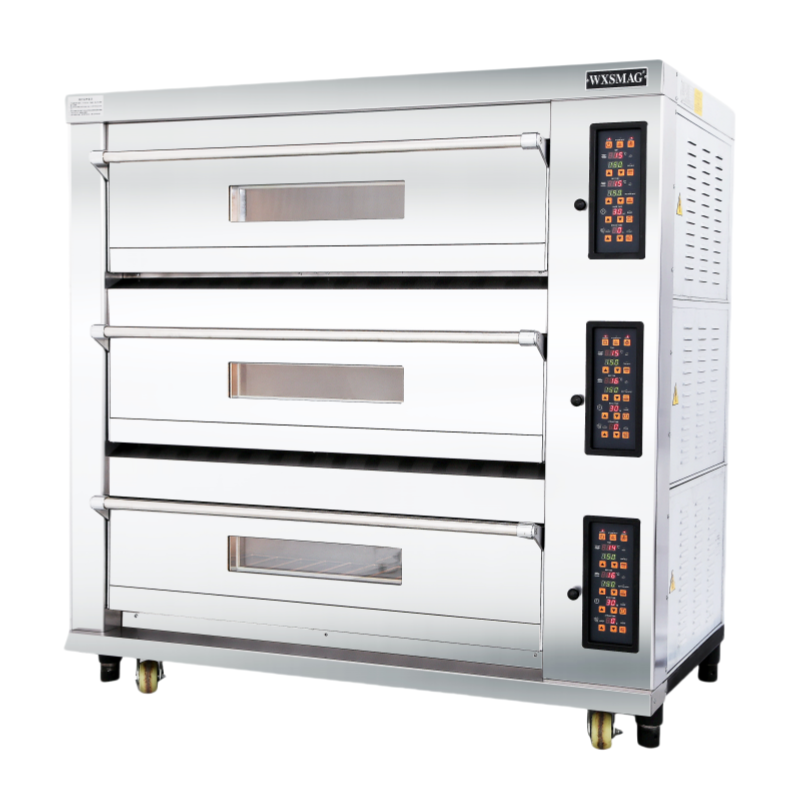
When it comes to baking, achieving consistent results is a top priority. Whether you’re baking a batch of cookies, a loaf of bread, or a delicate pastry, even slight variations in temperature or airflow can result in uneven cooking, leading to less-than-ideal outcomes. This is where convection ovens come into play. Convection Oven ovens, known for their even heat distribution and efficient airflow, have become an indispensable tool in both professional kitchens and home baking setups. These ovens utilize a fan and exhaust system to circulate hot air around the food, providing a more consistent and uniform heat environment compared to traditional ovens. This method of heat transfer is what makes convection ovens perfect for maintaining baking consistency.
The Basics of Convection Oven Technology
To understand why convection ovens are so effective for consistent baking, it’s essential to first grasp how they work. A conventional oven relies on natural heat distribution via either gas burners or electric heating elements at the top and bottom of the cooking chamber. The heat from these elements rises and heats the air inside, but this process can create uneven temperature zones within the oven, leading to hot spots and cool spots. As a result, food may bake unevenly, with some parts overcooked and others undercooked.
In contrast, convection ovens are equipped with a built-in fan and exhaust system. The fan circulates hot air evenly throughout the oven, ensuring that the temperature is uniform in every corner. This airflow helps to eliminate the hot and cold spots that are common in conventional ovens, allowing food to bake more evenly. Additionally, the fan helps to speed up the cooking process by constantly moving the air around, which can also contribute to more consistent results in less time.
Even Heat Distribution: The Key to Consistency
One of the biggest advantages of convection ovens is their ability to distribute heat evenly throughout the oven. In traditional ovens, heat tends to be concentrated at the top or bottom, depending on whether you’re using a gas or electric model. As a result, foods that are closer to the heating elements may cook faster or burn, while those further away may take longer to cook, creating inconsistent results.
In a convection oven, however, the fan and exhaust system work together to circulate hot air around the food, ensuring that the heat reaches every part of the dish. This even distribution of heat means that baked goods such as cakes, cookies, and pies will cook more uniformly. For example, when baking cookies, a convection oven ensures that each cookie bakes at the same rate, eliminating the risk of some cookies being undercooked while others are overdone.
This consistent heat also contributes to better texture and flavor. In many baking recipes, especially those involving delicate batters like soufflés or pastries, maintaining an even temperature is critical to achieving the right rise and crumb structure. Convection ovens make it easier to ensure that the food bakes evenly, resulting in a more consistent texture, color, and taste.
Faster Baking Times for More Consistent Results
Another significant advantage of convection ovens is their ability to bake food faster than traditional ovens. The fan system accelerates the cooking process by circulating hot air more efficiently, allowing the food to cook at a higher rate. This is particularly beneficial when baking items that require precise timing, such as soufflés or delicate cakes, where even a few extra minutes of baking time can alter the final outcome.
The faster baking time is not only a matter of convenience but also contributes to consistency. With reduced cooking times, there’s less room for fluctuation in temperature or overbaking. Since the oven reaches the desired temperature quickly and maintains it throughout the baking process, foods are less likely to be overcooked, undercooked, or subject to temperature fluctuations that can compromise their texture and taste.
In addition, the uniform heat distribution reduces the risk of overbaking on the outer layers while leaving the inner layers undercooked. In traditional ovens, food might cook unevenly, resulting in a dry outer crust and a raw or undercooked interior. Convection ovens, with their consistent airflow, help to avoid such issues by cooking food uniformly from the outside in, ensuring that both the interior and exterior are perfectly baked.
Enhanced Caramelization and Browning
One of the hallmarks of successful baking is achieving the right level of caramelization and browning, which enhances both the flavor and appearance of the food. In traditional ovens, achieving even browning can be tricky because of uneven heat distribution. Some parts of the dish may brown too quickly, while others may not brown enough, resulting in an uneven or unappealing appearance.
Convection ovens, on the other hand, promote even caramelization and browning by circulating hot air around the food. This process allows the heat to penetrate all areas of the food evenly, ensuring that every part of the dish gets the same exposure to heat. The result is more uniform browning and a beautiful golden crust on baked goods, whether it’s the top of a loaf of bread, the surface of a pie, or the outer layer of a roasted chicken.
In baked goods, this even browning is crucial for developing the right texture and flavor. For example, cakes and pastries that are evenly browned have a more balanced flavor and a lighter, airier texture. The enhanced caramelization also adds a rich depth of flavor to many foods, bringing out their natural sweetness and savory qualities.
Consistent Temperature Control for Precision Baking
Convection ovens are ideal for precision baking because they maintain a consistent temperature throughout the cooking process. Many baking recipes require strict temperature control to achieve the desired results. For instance, yeast-based doughs need a stable, warm environment to rise properly, while delicate meringues or macarons require exact temperatures to set correctly without overcooking.
With traditional ovens, it can be challenging to maintain a steady temperature, as fluctuations in heat can cause the dough or batter to rise unevenly or bake improperly. Convection ovens, however, offer superior temperature stability. The fan constantly circulates the air, helping to regulate the temperature within the oven more effectively. This results in a more predictable and controlled environment, allowing bakers to follow recipes with greater accuracy.
Moreover, the even temperature makes convection ovens perfect for baking multiple trays of food at once. In a traditional oven, one tray may receive more heat, resulting in uneven cooking. However, with the circulating airflow in a convection oven, multiple trays can bake at the same time without one being more cooked than the other, making it easier to bake large quantities of food with consistent results.
Energy Efficiency and Reduced Costs
While convection ovens are primarily known for their ability to bake with greater consistency, they also offer energy efficiency benefits. The faster cooking times associated with convection ovens not only save time but also reduce energy consumption. Traditional ovens may take longer to heat up, requiring more energy to maintain the desired temperature. In contrast, convection ovens reach and maintain their temperature quickly, reducing the amount of energy needed for cooking.
This energy efficiency not only reduces utility costs for home bakers but also helps reduce the environmental footprint of baking. By using less energy to bake the same amount of food, convection ovens are an environmentally friendly choice for those who want to minimize their impact on the planet while still enjoying high-quality baked goods.
Conclusion
Convection ovens are an essential tool for anyone who values consistency in their baking. Their ability to distribute heat evenly, bake food faster, and maintain precise temperature control ensures that baked goods come out perfectly every time. Whether you’re making bread, cookies, cakes, or roasting meats, convection ovens provide the ideal environment for achieving consistent results. The even airflow not only reduces the risk of undercooking or overcooking but also enhances the texture, flavor, and appearance of food. With faster cooking times, better caramelization, and more reliable temperature control, convection ovens make it easier than ever to produce bakery-quality results with every batch. For anyone serious about baking, these ovens are a game changer, ensuring that every creation comes out just as it should—flawless and delicious.